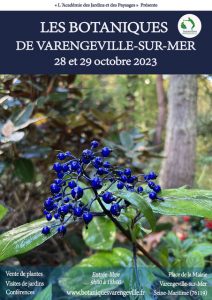
Group exhibition in Brittany, Côtes d’Armor
Le Houet, 22550 Matignon
August 3 to 5, 2024, from 51h to 19h30
Opening Sunday, August 4, 7pm
Information at +33 6 79 83 58 39

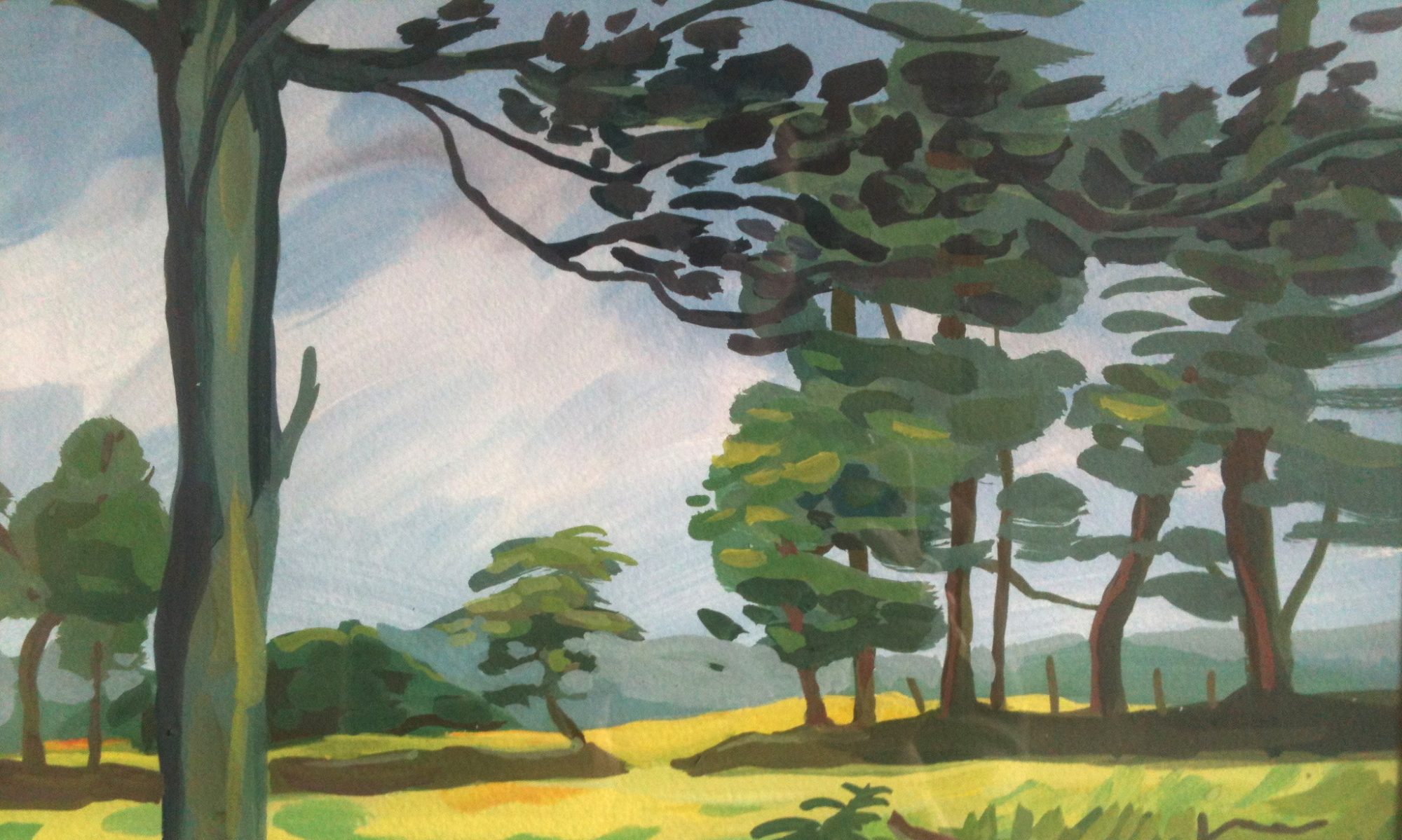
Artist painter of plants
Group exhibition in Brittany, Côtes d’Armor
Le Houet, 22550 Matignon
August 3 to 5, 2024, from 51h to 19h30
Opening Sunday, August 4, 7pm
Information at +33 6 79 83 58 39
As part of her writer’s residency in the Ile-de-France region, Raphaële Bernard-Bacot has produced and illustrated with her garden drawings a film based on the testimonies of eleven elderly people, to pay tribute to the generations of yesterday and inspire the generations of tomorrow.
Raphaèle Bernard-Bacot – Mémoires de jardins from remue.net on Vimeo.
“Jardins ouvriers, jardins de demain” exhibition, from May 11 to 31, 2024 at the L’Oiseau ‘Lire’ media library in Tergnier, Aisne.
As part of the opening of the seed library at the Tergnier media library in the Aisne department, a day of events entitled ‘From seed to garden’ on 15 May 2024: workshop and conference.
Médiathèque L’Oiseau “Lire”
Place Lionel Lefèvre
02700 Tergnier

(Read the report on the seed library on the France 3 website – in French)
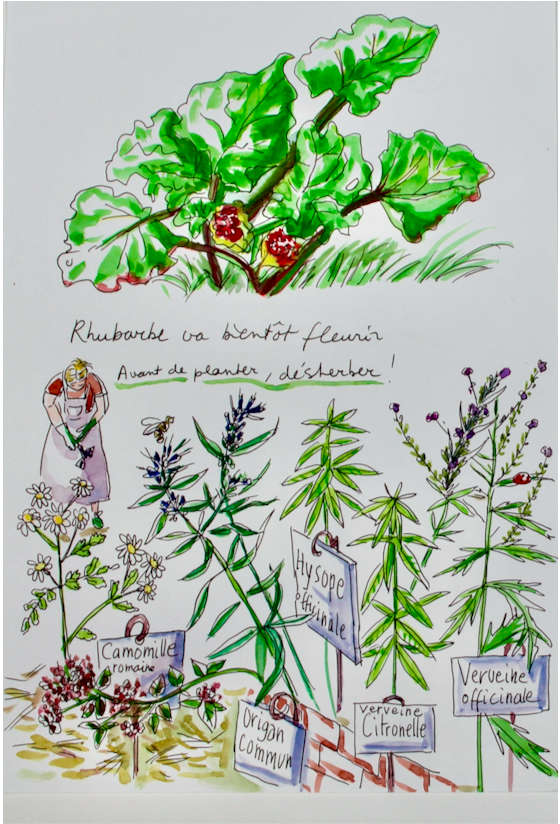
Are you looking for the best time/result ratio? Vote for rhubarb! For non-gardeners and occasional gardeners alike, rhubarb is a godsend. Requiring no care and growing in mid-shade and cool soil, this hardy perennial thrives every year. These giant leaves can reach a span of up to two meters. They are supported by their scarlet-red stems or petioles, tending to green, and form a particularly beautiful decorative ensemble in June.
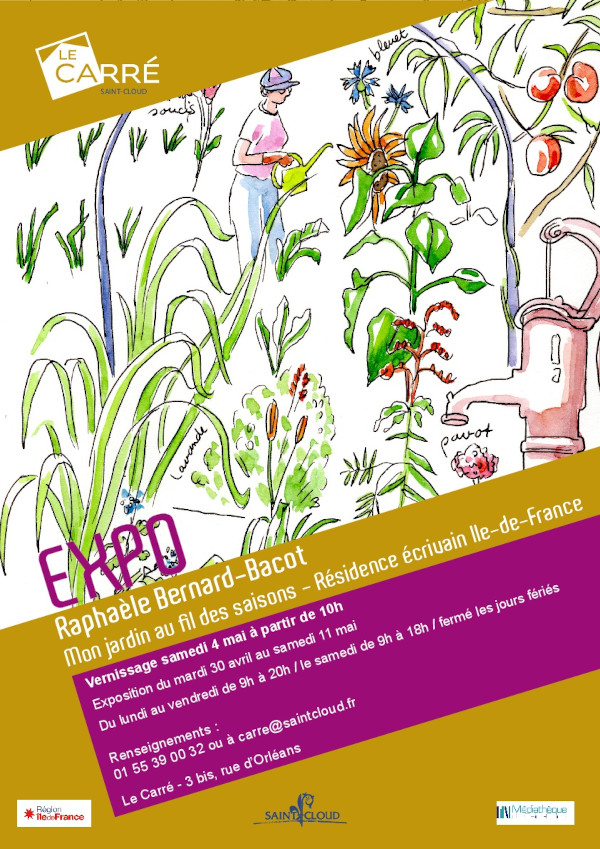
Exhibition to mark the end of my year in Writer’s Residence Ile-de-France: “Mon jardin au fil des saisons” (“My garden through the seasons”)
Exhibition from Tuesday April 30 to Saturday May 11, 2024
Monday to Friday, 9am to 8pm, Saturday 9am to 6pm, closed on public holidays
Opening: Saturday May 4 from 10 am
Le Carré
3 bis, rue d’Orléans
92210 Saint-Cloud
01 55 39 00 32 ou carre@saintcloud.fr
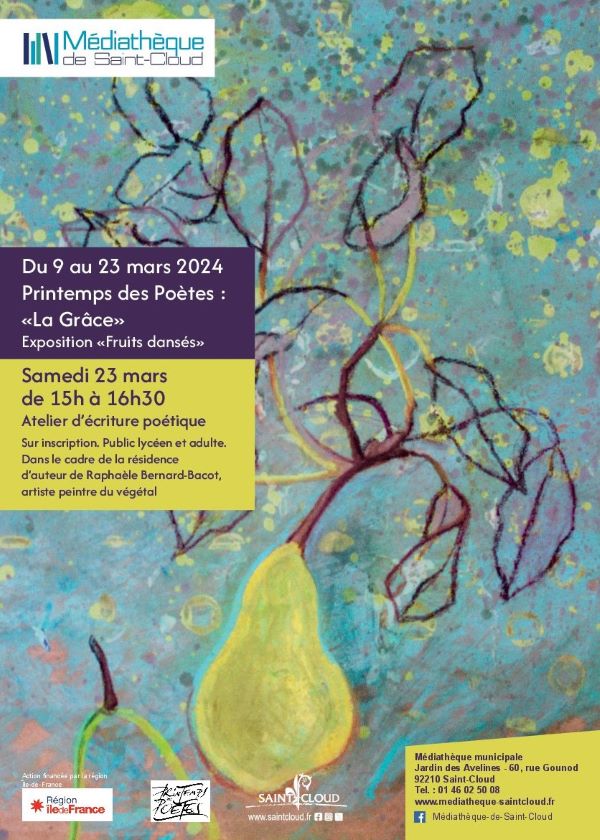
as part of the “Printemps des poètes” 2024 event at the Saint-Cloud media library.
March 23, 2024, from 3 pm to 4:30 pm: poetic writing workshop, as part of the Ile-de-France region’s author residency program.
For high-school students and adults – Registration required
At Saint-Cloud media library
Jardin des Avelines
60, rue Gounod
92210 Saint-Cloud
+33 1 46 02 50 08
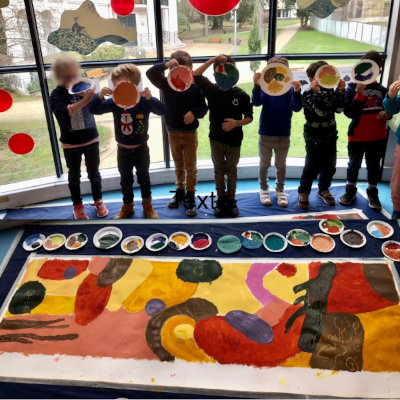
As part of the Ile-de-France Writer’s Residence: Project 1, workshop 3, seasonal colours, on 1 and 2 February 2024.
Well done to the CPs from the Pasteur school in Saint-Cloud for this collective fresco. Well done too for the palettes, which were created following specific recipes but freely interpreted.
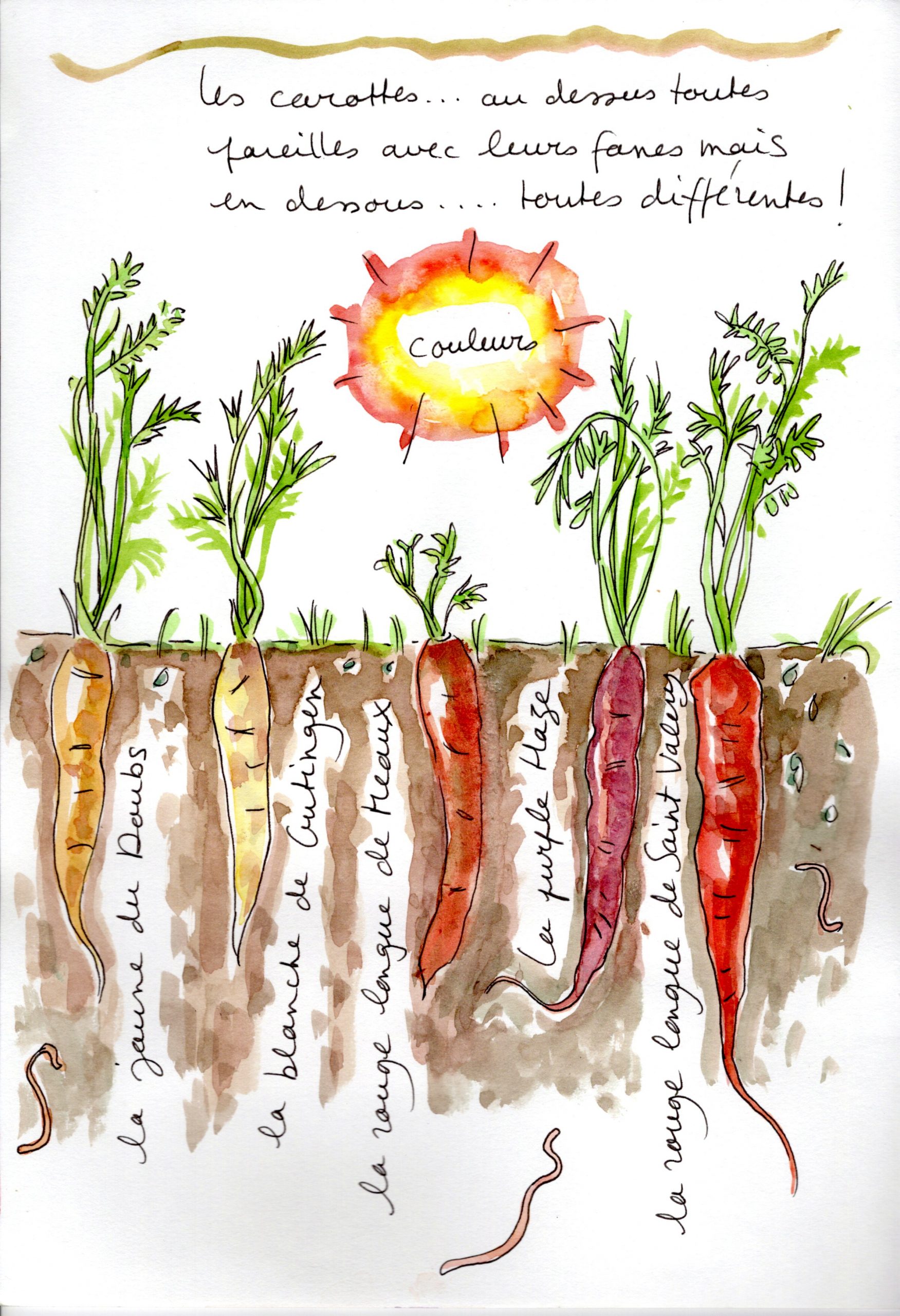
Carrots make you look and feel good, so why not start the year with them? By the way, do you know where they come from? The carrot, like many of our vegetables, comes from the East, its ancestors having been found in Eurasia, and more precisely in Afghanistan. Not very fleshy like its cousin, the parsnip, still very popular in Great Britain, the carrot came in all colors: from purple to pink, from yellow to orange or even white. But it wasn’t until the end of the 18th century, when white carrots were crossbred with red ones, that they strangely became orange instead of pink.
But how can you tell by its foliage what color it is under the soil ? There’s only one solution: pull out the root to identify it ! The carrot is in fact a taproot, because its root is unique, straight and tapered. If we didn’t harvest it in its first year, we’d see it blossom into magnificent white umbels, followed by seeds like any biennial plant. You would see it growing wild on our embankments, not to be confused with the poisonous hemlock.
But how can you tell from its outer foliage what color it is underground? There’s only one solution: pull out the root to identify it ! The carrot is in fact a taproot, because its root is unique, straight and tapered. If we didn’t harvest it in its first year, we’d see it blossom into magnificent white umbels, followed by seeds. Just as you’d see it growing wild on our embankments, not to be confused with the hemlock with its sinister reputation. This is characteristic of biennial plants. Continue reading “Happy carrots, happy new year !”
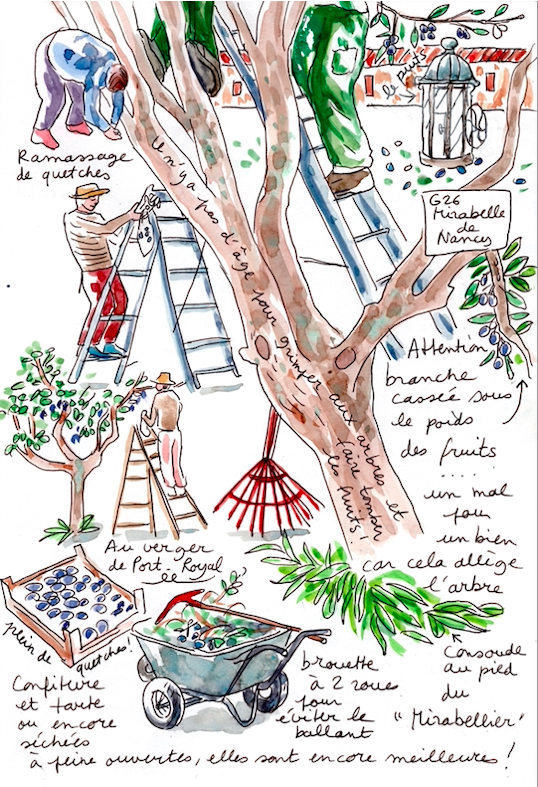
Do you remember, during summer holidays in the countryside, coming back from the orchard, with a half-full basket of plums now, in your hand, and your mouth full of the other half? Yellow, golden, red-pigmented yellow, yellow with a hint of green, or blue with a hint of violet, the range of plum colors is very subtle. Continue reading “Plums of the childhood”