June 2023: signing of my new book

Signing session for my new book “Jardins ouvriers, jardins de demain, promenade dessinée” published by Éditions Cours toujours

June 1st from 5pm to 7pm at the Exhibition Jardins, Jardin,
At the Tuileries, Librairie Eyrolles
Mail: fpelle@eyrolles.com – Tel: +33 (0)1 44 41 41 85

9 June at the Marché de la poésie, place Saint-Sulpice in Paris

14 June from 6.30 to 8.30 pm at the L’eau et les rêves bookshop
Péniche – Nature and Gardens Bookshop – Restaurant
9, quai de l’Oise, 75019 Paris

Hello spring, hello radishes!

When the nice days come back, we love their round and pink faces. Because in this period of transition between the winter vegetables and the first shoots of new vegetables, they taste as good as spring itself. Did you know that radishes do not belong to the root vegetable family? Known since antiquity, they are a part of the brassicas like mustard, arugula, watercress and cabbage. We find their traces in the writings of Olivier de Serres, considered as the father of French agronomy, the science of agriculture. Although in the sixteenth century, the terms of “agronomy” was referred to as “mesnager des champs or “farmland manager”. He invites gardeners to “sow every moon ( 28 days ) during six months…to have…every day new and tender raiforts (radishes)”. The agronomist is probably referring to the cultivation of radishes called “every month radish “. However, one has more chance of success if one waits until April to sow radishes, or even better early may. Continue reading “Hello spring, hello radishes!”

Spring 2023: workshops, signatures and conference

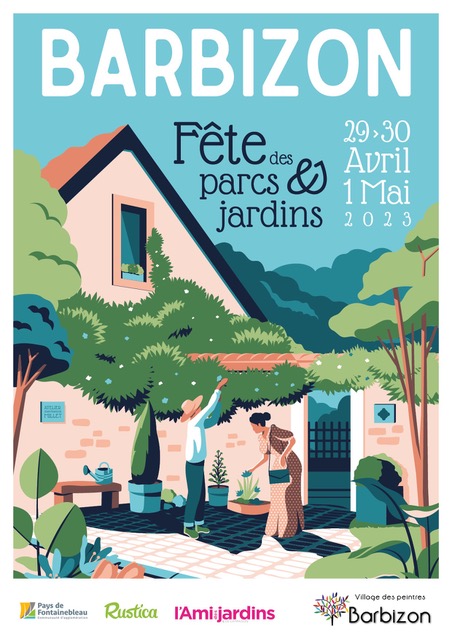
  • Sunday 30 April, workshop at the Fête des parcs et jardins, 77630 Barbizon
  • Monday 1 May, meeting at the Salon du livre d’expression populaire et de critique sociale, 62000 Arras
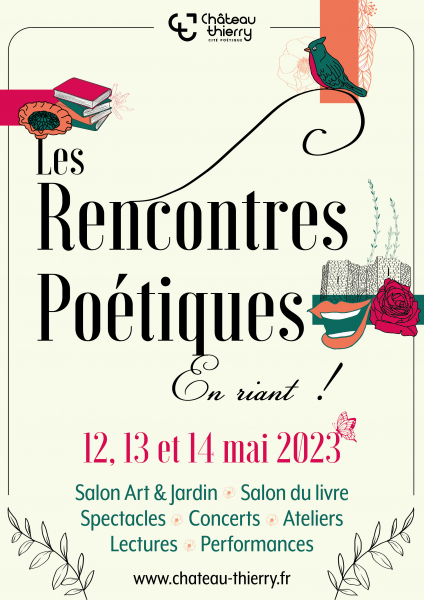
  • Sunday 14 May, workshop at the Rencontres poétiques, 02400 Chateau-Thierry
  • Wednesday 31 May, signing at the Lardanchet bookshop, 75008 Paris
  • Saturday 10 June, conference at the Festival du livre de Moreuil, 80110 Moreuil
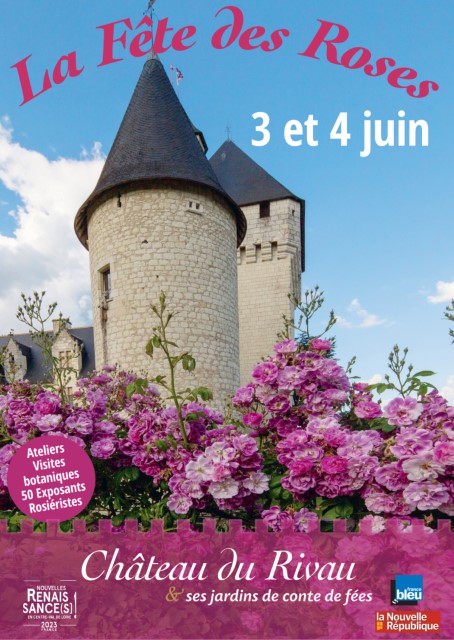
  • Weekend 3 and 4 June, workshop and signing at La fête des roses, Château du Rivau, 37120 Léméré
  • Saturday 24 June, drawing walk, 02400 Essomes
Workshop at the Barbizon plant festival on Sunday 30 April afternoon
Poster for the Château-Thierry poetry meeting in May 2023
Workshop at the Château-Thierry poetry festival on 14 May
Poster of the Rose Festival 2023 at Château du Rivau
Workshop and signing at the Rose Festival at the Château du Rivau, on 3 and 4 June

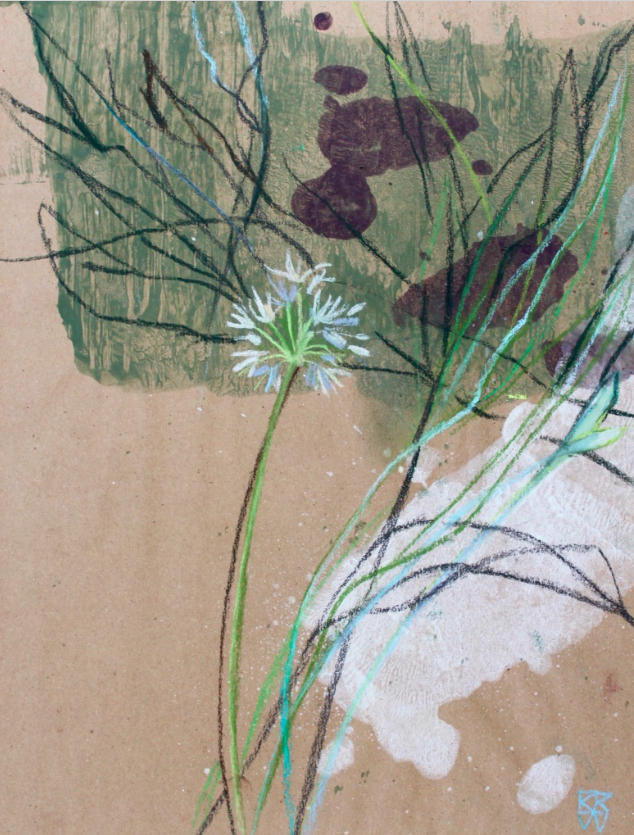
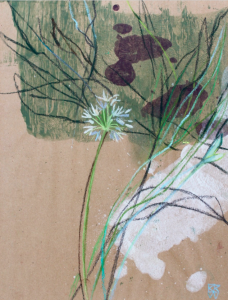
The Bear’s garlic

the bear's garlic for bears and gourmets

At the end of the winter , it’s as enchanting as snow, but this carpet of white flowers  of the “ Bear’s Garlic “ will only be visible from about March to May, that brief moment when the spring sun reaches the soil.  Then the plant disappears underground to concentrate its energy for the bulb to grow. This wild plant lives in the fresh and shaded environment. It appreciates the well-drained, light and rich ground . Why does this plant multiply so quickly in large colonies in the wood , in spite of the cold?  It spreads out all over the place for two reasons. On one hand,  the bulbs form bulbils like all the alliaceous family, and on the other hand, its flowers, looking like white little stars,  are carrying hundreds of seeds, which are disseminated by the ants.

This aromatic strong odor repulses the parasites.  Its savor recalls the garlic , in a more subtle way .This is very appreciated by the cooks for the pesto, called “the pesto of the undergrowth”. But also raw and chopped, it is a great addition to salads. So let’s all take a walk in the woods!
 

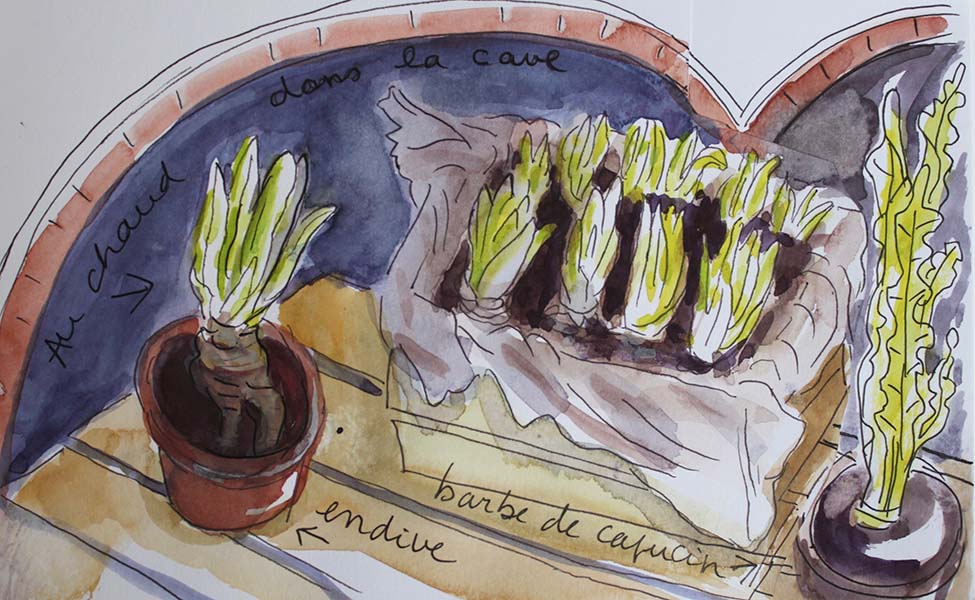
Endives, from garden to cellar

Endives, from garden to cellar

Who invented the endive ? One says that it is thanks to the head gardener’s Mr. Bréziers’ forgetfulness in Brussels around 1850, that the endive was created. Therefore when he discovered his forgotten endives at the end of his cellar, he did not recognize them. Their leaves had whitened and lengthened.  Their taste had almost lost their bitterness. And everybody was crazy about this. Continue reading “Endives, from garden to cellar”

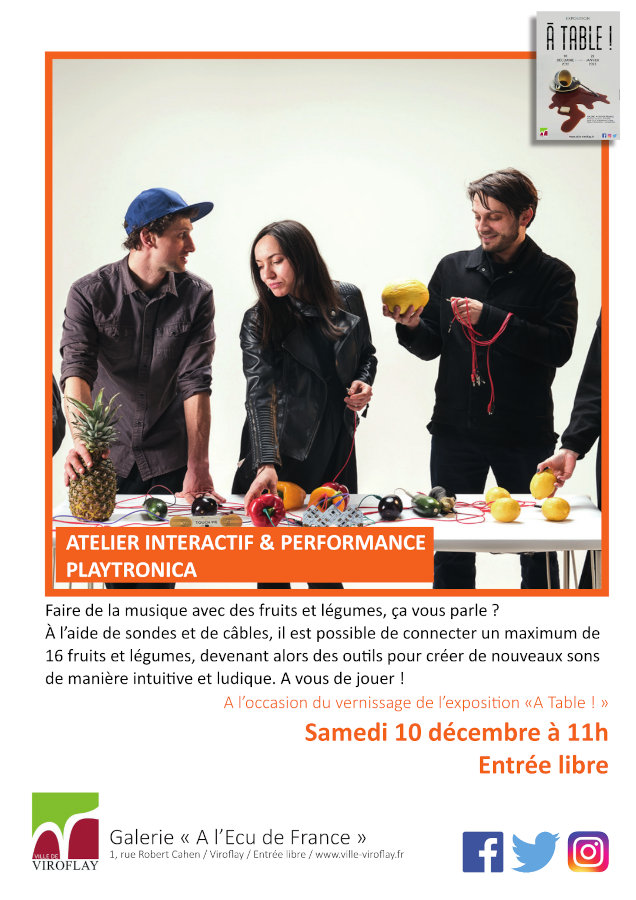
“A table!”: joint exhibition in Viroflay

A table!
from 10 December 2022 to 22 January 2023
at the Galerie L’Ecu de France
1, rue Robert Cahen, 78220 Viroflay

  • Open every day from 2pm to 7pm (except on December 25th and January 1st)
  • Opening on Saturday 10 December at 11am
  • Guided tour of the exhibition on Wednesdays and Sundays at 4.30 pm

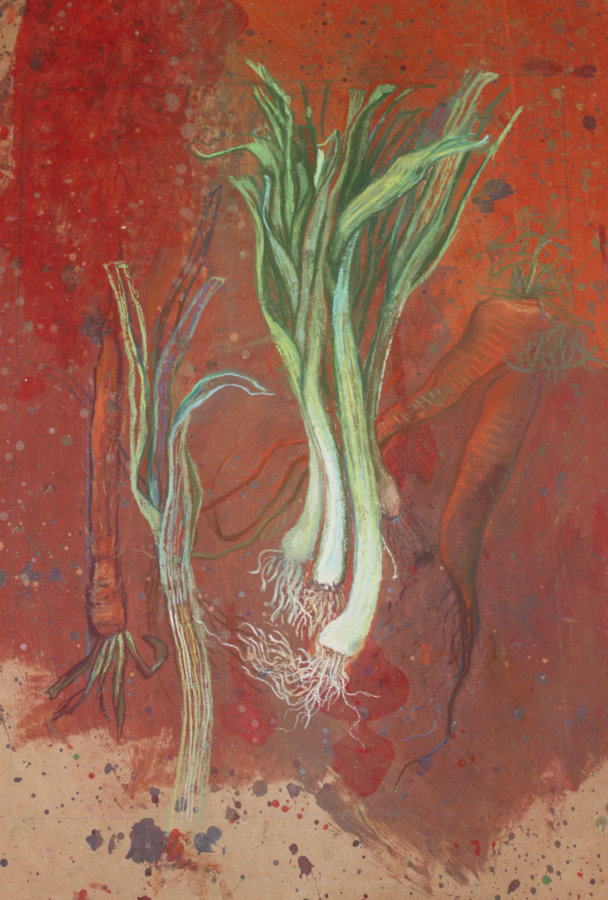
From the garden to the table, fruit and vegetables invite us to a feast for all the senses. Just over 10 years after the French gastronomic dinner was listed as a World Intangible Cultural Heritage of Humanity, the Arts of the Table continue to inspire us to share moments. All these simple things that are anchored in our daily lives are sublimated by the gaze of the artists with whom I share this exhibition: designers, visual artists, ceramists, sculptors, textile artists.

Affiche exposition "A table" Vernissage de l'exposition A Table Pastel représentant des poireaux et des carottes

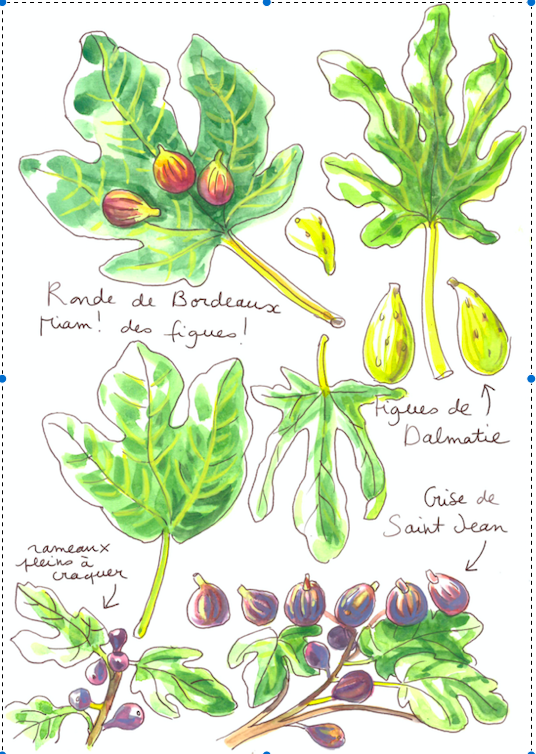
The Fig, False Fruit, Real Flower

Drawing of 4 types of figs

Was it because the fig tree was considered a divine tree in the Mediterranean basin that Louis XIV was crazy about it? He had 700 fig trees planted in crates that were brought in during the winter, like his famous orange trees. It was for those trees that Mansart designed the Fig Garden in the King’s Kitchen Garden. The pavilion still called by that name now houses the large exhibition rooms of the Ecole Nationale Superieure du Paysage (ENSP). Continue reading “The Fig, False Fruit, Real Flower”

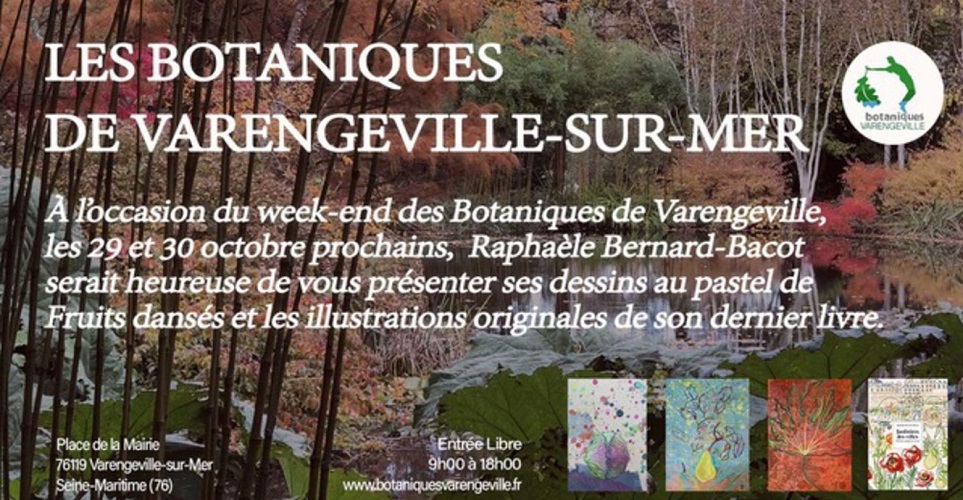
Exhibition in Varengeville

On the occasion of the 2022 edition of the Botaniques de Varengeville, exhibition of “Danced Fruits” (Fruits dansés) and original drawings of “City Gardeners” (Jardiniers des Villes), on October 29th and 30th.
I will be present on the site during the weekend.

Book signing of “City Gardeners, Portraits Sketched On The Spot” on Saturday 29 October at 4.30 pm.

Practical information
Free entry, from 9am to 6pm
Place de la Mairie, 76119 Varengeville-sur-Mer
https://botaniquesvarengeville.fr/evenement-2022/

Invitation pour l'exposition aux Botaniques de Varengeville les 29 et 30 octobre 2022

The king, the princes, and the green pea

the green pea

Did you know that before being small and green, the brown peas had fed men and animals since the Neolithic era in order to survive the harshest winters? In fact, easy to produce and well kept in a dry place, it is the best food to face periods of scarcity as its nutritional power surpasses meat. The pea belongs to the “fabaceae” family, like lentils or beans. Its destiny changed when in 1660, a daring cook named Audigier offered peas, still green, and in the middle of January, to the Sun King. And as it was the fashion in Italy, they loved it. Continue reading “The king, the princes, and the green pea”